
You already know the maths. The lie-flat bed up front costs about the same as a small used car, and the rest of us shuffle to the back, elbows tucked in, praying the person in front doesn’t fully recline the second the seatbelt sign goes off. That gap between the pointy end and the cheap seats has never been wider.
Here’s the good news though. You can’t turn 31 inches of legroom into a private suite. But you can close a shocking amount of the comfort gap for a fraction of what business class costs, and most of it comes down to a handful of decisions you make before you even get to the airport. Seat choice, a small kit bag, a couple of cheeky upgrades, and knowing which “extras” are worth paying for and which are a con.
I’ve done the overnight long-haul thing more times than my spine would like, mostly at the back, and I’ve slowly worked out what actually moves the needle. Some of it is money. A lot of it isn’t. So let’s sort your next flight out properly.
This article may contain affiliate links. If you make a purchase through these links, we earn a small commission at no extra cost to you. This helps fund the site and keeps our guides free. See our full affiliate disclosure for details.
Make Economy Feel Like First Class: Quick Facts
It starts and ends with the seat

If you take one thing from this, take this: the seat is the whole game. Everything else is trimming. You can bring the best neck pillow money can buy, but if you’re wedged in a middle seat at the back near the toilets, you’re going to have a bad night. So this is where your attention and, if needed, your money should go first.
The bit most people don’t clock is how big the gap is between the tightest economy and the roomier stuff, and how little it sometimes costs to jump across it. Standard economy usually gives you 30 to 32 inches of pitch, which is the distance from your seat to the one in front. Budget carriers and some short-haul layouts drop that to 28 or 29, which is where knees meet plastic. Pay a bit for extra legroom and you’re suddenly at 33 to 36 inches. Premium economy pushes to 36 to 40. That’s the difference between crossing your legs and not.
← Swipe to scroll on mobile
| Cabin or seat type | Typical pitch | Recline | Roughly what it adds |
|---|---|---|---|
| Tight or budget economy | 28 to 30 in | Barely any | Included in the fare |
| Standard economy | 30 to 32 in | 2 to 4 in | Included in the fare |
| Extra legroom or economy plus | 33 to 36 in | 2 to 4 in | £15 to £150 per leg (€18 to €175, $19 to $190) |
| Exit row or bulkhead | Up to 36 in and beyond | Varies | Similar to extra legroom |
| Premium economy | 36 to 40 in | 7 to 9 in | £300 to £650 one way (€350 to €765, $385 to $835) |
Prices are a guide and vary by route, date and demand. But you can see the shape of it. A few extra inches of knee room can cost less than a nice dinner. A whole cabin upgrade costs like a weekend away.
Which seats to actually grab, once you’ve decided how much to spend:
- Aisle if you like to move, stretch and get to the loo without climbing over two strangers. My default on daytime flights.
- Window if sleep is the priority. You get a wall to lean on and nobody clambering over you at 3am.
- Exit row or bulkhead for the most legroom in the cabin, though bulkhead loses the under-seat storage and exit rows can’t have kids or bags at your feet during takeoff.
- Front of the cabin if you’ve got a tight connection. You’re off the plane and through passport control while the back is still fighting for bin space.
And the ones to swerve: anything in the back few rows (turbulence feels worse, you board last and deplane last), seats right by the galley or toilets (traffic, light, smell, all night), and the row in front of an exit that sometimes doesn’t recline at all. A quick look at a seat map before you pick pays for itself.
The small upgrades that punch above their weight
Not every upgrade is a rip-off, and not every one is worth it. The trick is knowing which cheap add-ons genuinely change your flight and which just quietly lift the airline’s margins. In my experience, a small spend on the right seat beats a big spend on almost anything else.
Extra legroom is the obvious one, and it’s the upgrade I reach for on anything over five or six hours or any overnight. On long-haul you’re usually looking at roughly £50 to £150 per leg (€60 to €175, $65 to $190), which sounds a lot until you’re trying to sleep sitting bolt upright. Short-haul extra legroom is much cheaper, often £15 to £40 (€18 to €47, $19 to $50), and honestly not always worth it for a couple of hours.
Then there are the ones people forget about. Paying to skip the middle seat. Grabbing an exit row for the price of a normal extra-legroom seat. Bidding for a spare premium economy seat at the gate, which airlines sometimes release for a lot less than the online price. And priority boarding, which isn’t about legroom at all but does get your bag into the bin above your head instead of eleven rows back.
← Swipe to scroll on mobile
| Upgrade | What you actually get | Rough cost, long-haul | Worth it? |
|---|---|---|---|
| Aisle or window over middle | Control, a wall to lean on, easy escapes | Free to £15 (€18, $19) | Almost always |
| Extra legroom seat | 3 to 6 inches more knee room | £50 to £150 (€60 to €175, $65 to $190) | Yes if tall or overnight |
| Exit row | Most legroom in economy | Similar to extra legroom | Great value if you can do the safety bit |
| Priority boarding | Bin space and a calmer start | A few pounds up to £15 (€18, $19) | Nice to have |
| Gate bid to premium economy | A whole different cabin | Varies wildly, sometimes a steal | Yes if the price drops |
Build the amenity kit airlines stopped giving you

soundcore Anker Q20i, Hybrid Active Noise Cancelling Headphones
Block Out the World, Focus on Your Music
Business class hands you a little zip bag of nice bits. Back in economy you get, at best, a thin blanket and a pair of earplugs that fall out. So you build your own kit, and once you’ve done it once, it lives in your hand luggage and you barely think about it again.
The single best thing in there is a pair of noise-cancelling headphones. That constant engine drone is exhausting in a way you only notice once it stops, and killing it makes everything else, sleep, films, actual rest, far easier. After that it’s small stuff that adds up: a proper contoured eye mask that blocks real light, a memory-foam neck pillow so your head stops nodding forward, and compression wear for your legs on the long ones.
← Swipe to scroll on mobile
| Item | Why it earns its place | Rough cost |
|---|---|---|
| Noise-cancelling headphones | Kills the engine drone, best money you’ll spend | £40 to £250 (€47 to €295, $51 to $320) |
| Contoured eye mask | Proper darkness beats the flimsy freebie | £5 to £15 (€6 to €18, $6 to $19) |
| Memory-foam neck pillow | Stops the head-bob that wrecks your neck | £15 to £30 (€18 to €35, $19 to $38) |
| Compression stockings | Less swelling and lower clot risk on long legs | £10 to £25 (€12 to €30, $13 to $32) |
| Refillable water bottle | Fill it past security, sip the whole flight | £8 to £20 (€9 to €24, $10 to $26) |
| Power bank and short cable | A dead phone means no boarding pass and no films | £15 to £40 (€18 to €47, $19 to $51) |
One more that saves a lot of stress: sort your entertainment and connectivity before you fly. Download your films, playlists and offline maps at home, and grab a data plan so you land already online instead of hunting for airport wifi with a dying battery. I use an eSIM by Airalo so the moment we touch down the phone just works, no faffing with a physical SIM or a roaming bill that makes your eyes water.
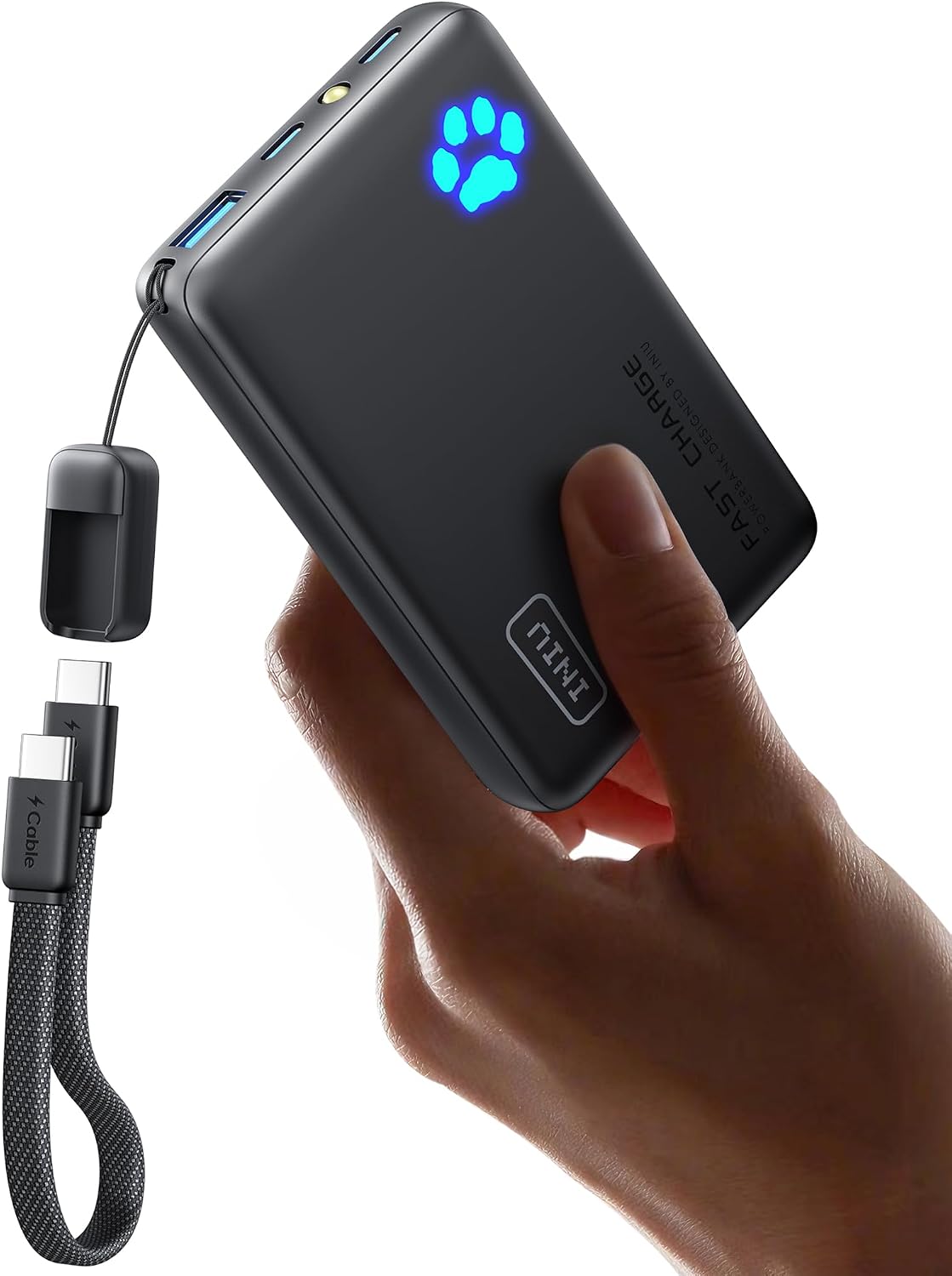
INIU 45W Fast Charging Power Bank, 40% Smaller 10000mAh
45W Pro Speed Portable Phone Charger
Dress like you're not trying to impress anyone
Nobody comfortable on a long flight is wearing jeans. I’ve tried, I’ve regretted it, I’ve spent seven hours undoing a button under a blanket. Loose layers are the move. A soft joggers-and-hoodie combo, or whatever your version of that is, plus a warm layer you can add when the cabin goes arctic at cruising altitude, which it always does.
Slip-on shoes so you can kick them off without a performance, and something warm for your feet once they’re off, because plane floors are freezing and nobody wants to pad to the toilet in bare feet anyway. Skip anything tight around the waist or ankles, since your feet swell up there like it or not. And bring that extra layer even in summer. The plane doesn’t care what the weather is like at your destination.
Win the airport before you even board
Here’s a thing first class travellers know that the rest of us often miss: half the misery of flying happens on the ground. The queues, the £6 coffee, the fight for a plug socket, the seat you can’t find. Fix that and you’re already halfway to a better trip.
An airport lounge is the not-so-secret weapon, and you do not need a business ticket to get in. A walk-up day pass at a UK lounge is usually £25 to £45 (€30 to €53, $32 to $58), which buys you comfy seats, proper food, free drinks, fast wifi and somewhere calm to sit. Pre-book through a lounge aggregator and you can sometimes get in from around £15 (€18, $19). If you fly a few times a year, an annual membership pass or the right travel credit card often works out cheaper than a handful of walk-ins.
← Swipe to scroll on mobile
| Way in | Rough cost | Best for |
|---|---|---|
| Walk-up day pass | £25 to £45 (€30 to €53, $32 to $58) | One-off big trips |
| Pre-booked through an aggregator | From around £15 (€18, $19) | Planning ahead |
| Annual membership pass | Yearly fee, then free or reduced entry | Four or more trips a year |
| Premium travel credit card | Bundled with the card’s annual fee | Regular flyers who’d pay the fee anyway |
| Airline status or a business ticket | Included | Loyal flyers |
Prices are a guide and vary by airport, lounge and how you book. The other ground-level upgrade worth its weight is sorting your ride at the other end. There’s nothing first class about landing shattered and then queuing forty minutes for a taxi. Booking an airport transfer in advance means someone’s waiting with your name on a sign and you’re at the hotel before you’ve fully woken up. It’s the little thing that makes the whole journey feel looked after.

Gear we actually travel with
Passport holders, packing cubes, travel wallets. Stuff that earns its place in the bag.
Browse the shopFood, drink and the great water con
Airline food gets a bad rap, and a lot of it is deserved. But there’s a trick most people never use: order a special meal in advance. Vegetarian, vegan, kosher, low-salt, whatever fits. They’re made separately, often taste fresher, and here’s the sneaky part, they usually get served first, so you’re eating while everyone else waits for the trolley to reach row 40.
Drink-wise, the cabin is drier than a desert, and dehydration is what makes you feel rough when you land, not the flight itself. Water, constantly, is the answer. That refillable bottle you filled past security earns its place here. Go easy on the free wine too, tempting as it is at altitude, because alcohol dehydrates you further and wrecks the sleep you were counting on. One glass to relax, then switch to water. Your future self, stumbling through arrivals, will thank you.
How to actually sleep back there

Sleeping in economy is a skill, and the seat you booked earlier is doing most of the heavy lifting. A window seat gives you something to lean on and control over the blind. Get that eye mask on, headphones in, and set the scene before you’re desperate rather than after.
Timing matters more than people think. On an overnight, eat early, then try to sleep on the destination’s clock rather than staying up watching a fourth film because it’s there. Recline the moment you’re allowed (gently, check behind you first), get your feet up on whatever you can, and treat it like a proper attempt at rest, not something you’ll get round to. A little wind-down routine, the same one you’d use at home, tells your brain it’s bedtime even at 35,000 feet.

Sleep Mask, 2 Pack of Super Soft and Comfortable Eye Mask for Sleeping
The eye mask for sleeping has an additional protective area at the nose bridge, using a softer and more comfortable padded material
Land like a human: beating jet lag
The whole point of all this is arriving in a state to actually enjoy where you’ve gone. Jet lag is mostly your body clock arguing with the local time, and light is the strongest tool you’ve got to settle it. Get outside into daylight when you land if it’s daytime, and keep the cabin blackout going if you’re trying to hold on to nighttime.
Move on the flight too. Get up every couple of hours on the long ones, walk to the back and stretch, roll your ankles when you’re sitting. It’s not just about comfort, it genuinely lowers the risk of the swelling and clots that come from sitting frozen for eight hours. Small movements, often, make a real difference to how you feel stepping off.
When it's genuinely worth paying up
Sometimes the honest answer is: pay for the better cabin. If you’re tall, if it’s an ultra-long-haul overnight, if you land and go straight into something that matters, the maths on premium economy can stack up. You’re looking at roughly £300 to £650 one way (€350 to €765, $385 to $835) for a wider seat, real recline, a leg rest and a better meal. Not first class money, but a proper step up from the back.
Points and miles are the other route worth knowing. If you collect them through a card or a frequent flyer scheme, an upgrade can cost you a slice of your balance rather than real cash, and that’s where the genuine bargains hide. Cash upgrade offers at check-in or the gate are worth a look too, since they’re often cheaper than booking the cabin outright. My rule: pay up for the flights where being wrecked on arrival would actually cost you something, and tough it out with the seat-and-kit approach on the rest.
And if things go sideways, know your rights. A long delay or a cancellation on a covered route can mean real compensation, and a service like flight compensation chases the claim for you if you can’t be bothered with the paperwork. Pair that with decent travel insurance and the bumps in the road stop feeling like disasters. First class doesn’t mean nothing goes wrong. It means you’re covered when it does.
The takeaway
You don’t need to spend business class money to have a flight that doesn’t leave you broken. Book the right seat first, since that’s the biggest lever by miles. Build a little comfort kit and keep it packed. Win the airport with a lounge and a transfer waiting at the other end. Drink your water, wear your soft clothes, sleep on the local clock. Do that and you’ll step off feeling like a person, not a parcel.
Ready to plan the rest of it around a smarter flight? Start with our budget travel guides for more ways to spend less and feel more looked after, and if you’re mapping out a whole trip, our step-by-step guide to planning a trip ties it all together. See you out there, somewhere near the front of the cabin.
You do not need a bag that looks like it belongs on a bomb disposal unit. That is the first thing to get straight. Most travel theft is lazy, opportunistic stuff. A hand slipping into an open backpack pocket on a packed metro. A phone lifted off a cafe table while you squint at the menu. A bag left hanging on the back of a chair that quietly walks off with someone else. The gear worth buying is the gear that makes you a slightly more annoying target than the person standing next to you. That is basically the whole game.
FAQs
Can you really make economy feel like first class?
Not literally, no. There’s no version of a standard seat that becomes a flat bed. But you can close a genuinely surprising amount of the comfort gap for a small fraction of the price, mostly through the right seat, a good carry-on kit and a few sensible habits.
What's the single best seat to pick in economy?
For legroom, an exit row or bulkhead aisle. For sleep, a window near the front of the cabin so you’ve got something to lean on and nobody climbing over you. If you’ve got a tight connection, sit as far forward as you can so you’re off first.
Is extra legroom or premium economy better value?
It depends on your height and the flight length. Extra legroom gives you knee room and little else for £50 to £150 a leg on long-haul. Premium economy is a whole different cabin, wider seat, deeper recline, better food, for £300 to £650 one way. For a quick daytime hop, save your money. For a tall person on an overnight, premium economy earns its keep.
How do I get into an airport lounge without flying business?
Buy a walk-up day pass at the door (usually £25 to £45), pre-book through a lounge aggregator for less, take out an annual membership pass, or get a travel credit card that bundles lounge access in with its fee. None of it requires a posh ticket.
What should I never forget in my hand luggage for a long flight?
Noise-cancelling headphones, a real eye mask, a refillable water bottle, a charged power bank, any medication, and compression wear for your legs. Download your entertainment and offline maps before you leave home, and sort a data plan so you land already connected.
Travel Hubs
Recommended Websites and Resources:
- Flights: Find the best deals on Trip.com
- Hotels: Best rates on Booking.com · Best hostels on HostelWorld · Ratings and bargains on TripAdvisor
- Apartments: Affordable rentals on VRBO
- Car hire: Best prices on RentalCars.com
- Travel insurance: EKTA for worldwide cover · AirHelp for flight delay compensation
- Activities: Tours and skip-the-line tickets on GetYourGuide · Instant mobile tickets on Tiqets
- Trains: Most affordable trains on Trainline · Rail passes on Rail Europe
- Travel eSIMs: Use your mobile phone anywhere worldwide with Airalo
- Need more help planning your trip? Visit our Resources Page to see all the companies we trust and use for our travels


