
You know that sinking feeling at the check-in desk when the scales creep past the limit and the person behind the counter gives you “that” look? That is the exact feeling this post wants to kill off.
Packing well is not some mystical talent a few lucky people are born with. It is a handful of habits, repeated until they stop feeling like effort. I have packed for weekend city breaks, month-long trips and everything in between, and the difference between a smooth departure and a stressful one almost always comes down to a few small decisions made before you ever leave the house.
So here are 15 packing tips I actually use. Some you will have heard before (the good ones bear repeating). A few might change how you pack for good. No fluff, no filler, just the stuff that saves you space, money and a fair bit of stress.
This article may contain affiliate links. If you make a purchase through these links, we earn a small commission at no extra cost to you. This helps fund the site and keeps our guides free. See our full affiliate disclosure for details.
Genius Packing Tips: Quick Facts
1. Ditch the mental list. Write it down.

The single best packing upgrade costs nothing. Write a list. An actual list, not a vague mental note you will definitely remember (you won’t). A written list stops the overpacking spiral, catches the boring essentials everyone forgets, and turns last-minute packing from a panic into a ten-minute job.
Build it once, save it on your phone, and tweak it for each trip. If you would rather not start from a blank page, run it through my packing list generator and it will spit out a sensible starting point by trip type. Prefer paper? The free travel starter kit has printable packing checklists you can tick off by hand.
One small trick that makes a real difference either way: name things specifically. Write “passport wallet” instead of “wallet”, “phone charger and cable” instead of “charger”. The vague list items are the ones that get left on the kitchen table.
2. Roll the soft stuff, fold the stiff stuff

The great rolling debate. Here is where I land after years of trial and error: roll the soft stuff, fold the stiff stuff. Rolling saves space and keeps wrinkles down on t-shirts, jeans, casual dresses and knitwear. Folding is kinder to tailored shirts, blazers and anything with a structured shape that creases in odd places when you scrunch it.
Do not treat it as all-or-nothing, though. Most bags end up a mix of rolled and folded, and that is exactly right. Here is the quick version of what goes which way.
← Swipe to scroll on mobile
| Item | Best method | Why |
|---|---|---|
| T-shirts and casual tops | Roll | Saves space, keeps creases to a minimum |
| Jeans and trousers | Roll | Bulky, but rolls down tight and neat |
| Knitwear and jumpers | Roll, or wear the chunky one | Springs back into shape, no hard creases |
| Shirts and blouses | Fold | Keeps collars and lines crisp |
| Blazers and tailored jackets | Fold, or carry it | Structured fabric creases badly when rolled |
| Underwear and small items | Roll and stuff in gaps | Fills dead space inside shoes and corners |
3. Zone your bag with packing cubes

Compression Packing Cubes
Pack more for the trip: With the spacious packing cubes compression with extra-large capacity
Packing cubes are the one bit of kit I would genuinely fight you over. They turn a chaotic suitcase into something that makes sense: one cube for tops, one for bottoms, one for underwear, one for the odds and ends. When you land, you are not tipping the whole bag out onto the hotel bed to find one t-shirt. You unzip the cube you need and the rest stays put.
They also compress your clothes a little, so you fit a bit more in. A set of three or four runs about £15 to £25 (€18 to €30, $20 to $32) and lasts years. Honestly one of the best value travel buys going.
4. Weigh your bag at home

A cheap luggage scale is one of those buys that pays for itself the very first time. Weigh your packed bag at home, on the floor, in calm conditions, not at a crowded check-in desk with a queue building behind you and your heart rate climbing.
A scale costs about £10 to £15 (€12 to €18, $13 to $19) and it removes one of the most common travel-day gut-punches: the surprise excess fee. On some budget airlines, going over the limit is charged per kilo, and it adds up faster than you would think.
5. Build a capsule, not a wardrobe
Pack a capsule, not your whole wardrobe. Pick a base of two or three colours that all play nicely together (black, navy, grey, khaki, take your pick), then everything mixes and matches. Suddenly five tops and three bottoms give you a dozen outfits instead of eight separate ones that only work one way.
You pack less, you photograph better, and you spend zero mornings staring into a suitcase wondering what goes with what. A good capsule usually looks something like this:
- Two or three bottoms in neutral shades that go with everything
- Four or five tops you can dress up or down
- One layer for cooler evenings
- One “nice” outfit for a proper dinner out
- Shoes you can actually walk in, plus one smarter pair
Fewer decisions, more holiday. That is the whole idea.

Gear we actually travel with
Passport holders, packing cubes, travel wallets. Stuff that earns its place in the bag.
Browse the shop6. Wear your bulkiest stuff on the plane
Your heaviest, bulkiest items should be on your body, not in your bag. Boots, the chunky jumper, the winter coat: wear them onto the plane. It looks slightly ridiculous shuffling through a warm airport dressed for a blizzard, but nobody remembers and your bag thanks you for it.
Coats earn their place twice over. They double as an in-flight blanket when the cabin gets cold, and the pockets are free luggage the scales never see.
7. Get the liquids rule right
Liquids are where a lot of otherwise-smart packers come unstuck. The safe default, still in force at plenty of airports, is the classic 100ml rule: every liquid, gel, cream, paste or aerosol goes in a container of 100ml or less, and they all fit inside one clear resealable bag. That is your baseline, and it always works.
Now the twist. Some airports have installed new CT scanners and lifted the limit to 2 litres per container, with no clear bag needed. Sounds brilliant, and it is, until you realise the rollout is patchy. Your outbound airport might wave through the big bottles while your return airport still runs the old rule and bins them at security. Until it is consistent everywhere, pack to 100ml unless you have checked your exact airport.
← Swipe to scroll on mobile
| Situation | Container limit | Clear bag needed? | Best move |
|---|---|---|---|
| Standard security (older scanners) | 100ml per container | Yes, one clear resealable bag | Decant or go solid |
| Airports with new CT scanners | Up to 2 litres per container | No | Still check before you rely on it |
| Medication | Larger amounts allowed | Declare it at security | Keep it in original packaging |
| Baby milk and food | Larger amounts allowed | Declare it at security | Carry only what you need |
8. Pack a "keep it handy" pouch
Pack a small pouch of things you will want within arm’s reach, and keep it in your personal item, not buried in the overhead bin. When you are wedged into a middle seat, the last thing you want is to be the person standing up mid-flight, rummaging through the locker while the drinks trolley waits.
Mine usually holds:
- Passport, boarding pass and a pen for landing cards
- Phone, charger and a power bank
- Any medication I might need in the air
- Headphones, a snack and a refillable water bottle (empty through security)
- A spare face mask and a small hand sanitiser
9. One full outfit goes in your carry-on. Always.
Even if you are checking a bag, pack one complete outfit plus a change of underwear in your carry-on. Delayed and lost bags happen more than the airlines would like you to think, and there is nothing quite like landing for a big trip and realising everything you own is currently in a different country.
One clean outfit buys you a day of dignity while the airline sorts itself out. It is the cheapest bit of insurance in this whole list.
10. Go small or go solid with toiletries

Toiletries are quiet space-and-weight thieves. Two fixes sort most of it. First, decant into small refillable bottles rather than hauling full-size everything (you are away a week, not emigrating). Second, go solid where you can.
Shampoo bars, conditioner bars, toothpaste tablets and solid deodorant sail through security because they are not liquids at all, and they last ages. As a bonus, nothing explodes across your clothes at altitude, which is a real and grim thing that happens with full bottles when the cabin pressure changes.
11. Power banks and cables travel with you
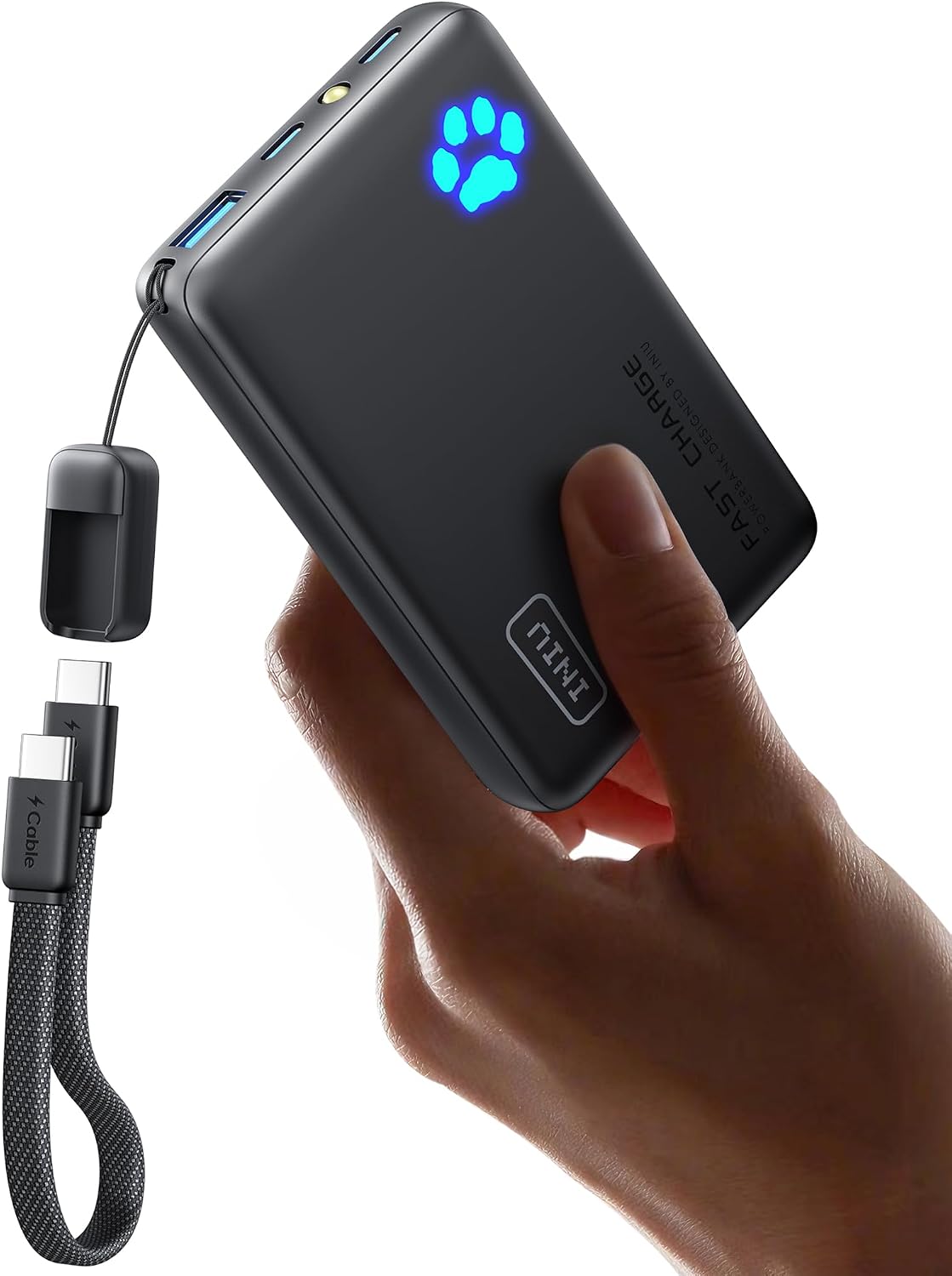
INIU 45W Fast Charging Power Bank, 40% Smaller 10000mAh
45W Pro Speed Portable Phone Charger
Power banks live in your carry-on. Always. They are not allowed in checked bags at all, because of the fire risk from lithium batteries. There are newer rules in force too: most airlines now cap you at two power banks, want them kept within reach rather than up in the overhead locker, and do not let you charge them during the flight.
Size matters as well. Anything up to about 100 watt-hours (roughly a 27,000mAh bank) is fine without asking anyone. Go bigger and you need airline approval, and the really large ones are banned outright. The number that counts is watt-hours, not the big mAh figure printed on the front.
← Swipe to scroll on mobile
| Power bank size | Roughly in watt-hours | Allowed on board? |
|---|---|---|
| Up to about 27,000mAh | Up to 100Wh | Yes, carry-on only, no approval needed |
| About 27,000 to 43,000mAh | 100 to 160Wh | Carry-on only, and needs airline approval |
| Above about 43,000mAh | Over 160Wh | Not permitted on the plane |
12. Sort your digital packing
Half of packing now happens on your phone. Before you leave, download offline maps of where you are going, save your boarding passes, and photograph the important stuff: passport, insurance details, booking confirmations, even the contents of your bag. If anything gets lost or stolen, a photo saves you a world of pain later.
I also sort connectivity before I fly rather than hunting for wifi on arrival. Grabbing an eSIM before you fly means you land with working data and maps already running, no queueing for a local sim or paying silly roaming rates. And keep your travel insurance details somewhere you can reach them offline, because the one time you actually need them is never the time you have a signal.
13. Fill every gap in the bag
Empty space is wasted space. Stuff the inside of your shoes with small soft items (rolled-up underwear, a phone cable, sunglasses in a hard case). Slot flat things down the sides. Tuck belts around the edge of the case. A bag with no air pockets holds more, and your clothes shift around less in transit, so they turn up in better shape.
One small thing that saves a lot of grief: pop your shoes in a bag, or put a shower cap over the soles, so you are not pressing street grime into your clean clothes. Sounds fussy. Works a treat.
14. Leave room for the way home
Pack with the return trip in mind. You will almost certainly come home with more than you left with: gifts, that thing you swore you would not buy, laundry that somehow takes up more room than clean clothes ever did. Leave a bit of breathing space in the bag, or pack a lightweight foldable bag that lives flat in your case and comes out as a second bag on the way back.
Future you, standing over a suitcase that will not close in a hotel room at 6am, will be very grateful.
15. Know your baggage allowance before you pack
Last one, and it is the one that saves the most money: know your baggage allowance before you pack, not at the gate. Every airline is different, budget carriers especially, and the penalties for getting it wrong are brutal. A bag that does not fit the sizer at the gate can cost up to around £70 (€80, $90) to sling in the hold, which is often more than the flight itself.
Check the cabin and hold limits for your exact airline and fare, measure your bag against them, and weigh it at home. Five minutes of admin against a gate fee that ruins your morning. Not a hard sum, that one.
← Swipe to scroll on mobile
| What you are paying for | Booked online, ahead | At the airport or gate |
|---|---|---|
| Cabin bag (budget airline) | About £6 to £36 (€7 to €40, $8 to $45) | Roughly double, and rising the later you leave it |
| Checked bag, 20kg (budget airline) | About £20 to £60 (€23 to €70, $25 to $75) | More again if added at the desk |
| First checked bag (US carriers) | About $35 to $50 (£28 to £40, €33 to €47) each way | Higher when paid at the airport |
| Bag that does not fit at the gate | Not applicable | Up to around £70 (€80, $90) |
| Excess weight (per extra kilo) | Not applicable | Around £11 (€12, $14) per kg |
Prices are a guide and vary by route, date and demand.
Pack smart, travel easy
That is the lot. Fifteen tips, none of them complicated, all of them the sort of thing that quietly makes travel easier once they turn into habit. Start with the boring ones (write a list, weigh your bag, check your allowance) and the rest tend to follow on their own.
Packed and ready? Once the bag is sorted, the fun part is lining up what you will actually do when you land. It is worth booking the popular tours and experiences ahead of time so you are not queueing on the day or missing out entirely. And if you are landing somewhere unfamiliar with a heavy bag, a pre-booked airport transfer takes one worry off arrival day.
Still fine-tuning the details? There are plenty more packing guides where this came from, from last-minute packing when you have left it far too late, to packing for the whole family without losing your mind.
Now go and enjoy the trip. The bag is the easy part.
FAQs
What are the best things to pack in a carry-on?
Your passport, phone and charger, any medication, a power bank, one full change of clothes, and a small liquids bag. Basically anything you cannot easily replace, plus anything you would badly want if your checked bag went missing.
Is it better to roll or fold clothes when packing?
Both, depending on the garment. Roll soft, casual things like t-shirts and jeans to save space and cut down on creases. Fold structured items like shirts and blazers to protect their shape. Most people end up doing a mix, and that is the right answer.
How do I avoid paying extra baggage fees?
Weigh your bag at home with a cheap luggage scale, check your airline’s exact size and weight limits before you pack, and book any checked bag online in advance rather than at the airport. Going carry-on only skips hold fees altogether.
Can I put a power bank in my checked luggage?
No. Power banks must travel in your carry-on because of the fire risk from lithium batteries. Most airlines also limit you to two, want them kept within reach, and do not allow you to charge them during the flight.
How many outfits should I pack for a week away?
Fewer than you think. A capsule of two or three bottoms and four or five tops in colours that all match gives you a week of outfits with room to spare. On longer trips, plan a bit of laundry and pack even lighter.
Travel Hubs
Recommended Websites and Resources:
- Flights: Find the best deals on Trip.com
- Hotels: Best rates on Booking.com · Best hostels on HostelWorld · Ratings and bargains on TripAdvisor
- Apartments: Affordable rentals on VRBO
- Car hire: Best prices on RentalCars.com
- Travel insurance: EKTA for worldwide cover · AirHelp for flight delay compensation
- Activities: Tours and skip-the-line tickets on GetYourGuide · Instant mobile tickets on Tiqets
- Trains: Most affordable trains on Trainline · Rail passes on Rail Europe
- Travel eSIMs: Use your mobile phone anywhere worldwide with Airalo
- Need more help planning your trip? Visit our Resources Page to see all the companies we trust and use for our travels


