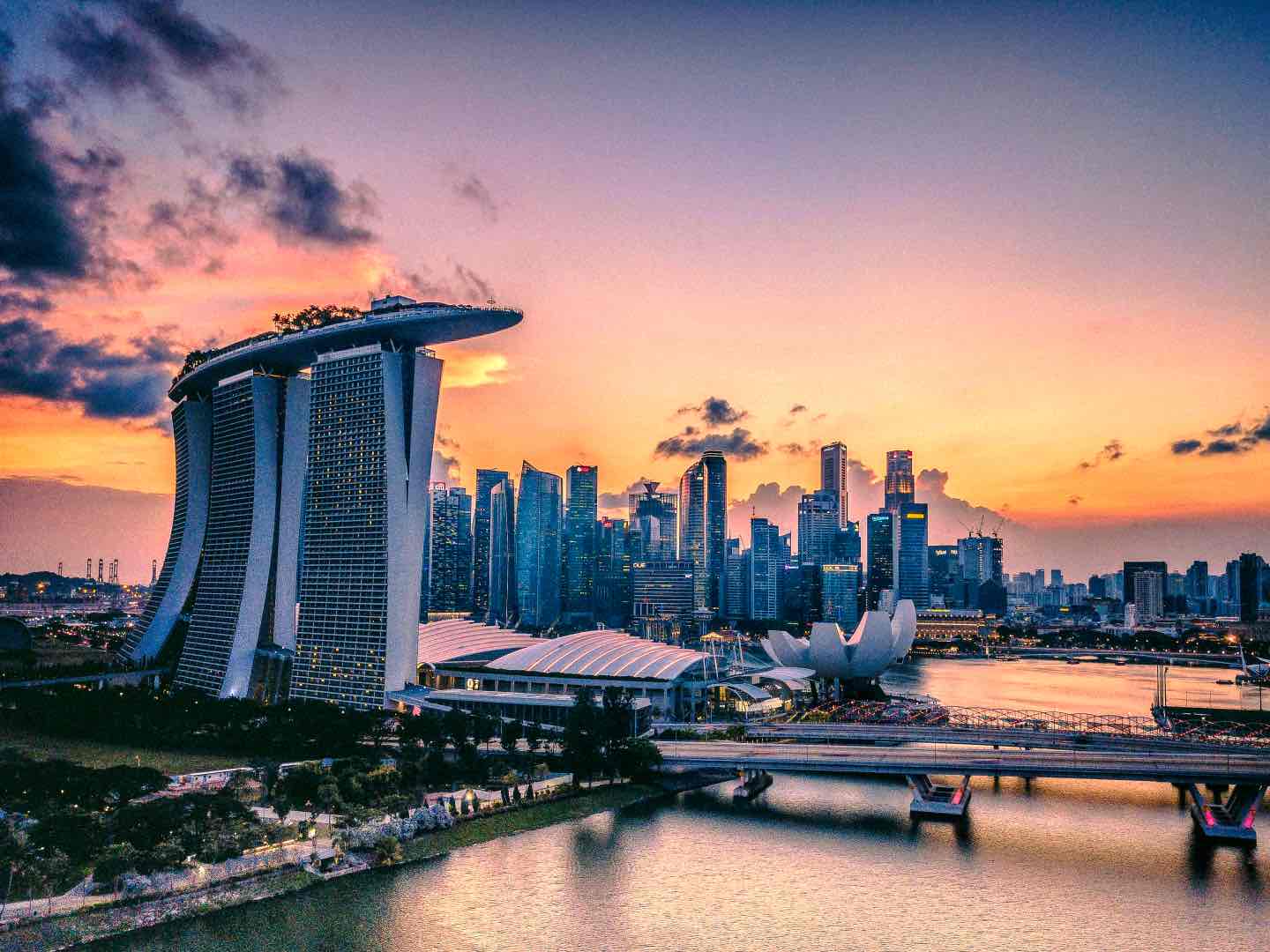
Singapore: Asia's Most Surprisingly Addictive City
Hawker centres, rooftop bars, sci-fi gardens, and food that makes you rebook your flight. Here’s everything you need.
Singapore is small on the map, but it absolutely overdelivers. Sleek towers sit next to hawker stalls that have been feeding families for generations. You’ve got rooftop bars, futuristic gardens, colonial streets, and neighbourhoods that each feel like a different city – Chinatown, Little India, Kampong Glam, the CBD. All within a 45-minute MRT ride of each other. It’s safe, easy to navigate, and the food alone is worth the flight. Whether you’ve got three days or a week, Singapore has a habit of making you wish you’d stayed longer.
13–14 hrs
From the UK
Feb – Apr
Best time
English
Main language
SGD
Currency
This article may contain affiliate links. If you make a purchase through these links, we earn a small commission at no extra cost to you. This helps fund the site and keeps our guides free. See our full affiliate disclosure for details.
Jump to...
ToggleBest Time To Visit
Singapore is warm and humid year-round, so the big question is less “will it be hot?” and more “how wet will it be?”. You can visit any time, but picking your season well makes sightseeing a lot more comfortable.
February to April is often the sweet spot, with slightly lower rainfall, plenty of sunshine, and good conditions for walking around neighbourhoods, gardens, and waterfront areas without feeling like you’re in a permanent steam room.
June to August is busy and can be a bit drier, but it’s also peak holiday season, so hotels can jump in price. It’s still a great time to go if you don’t mind crowds and you love indoor air con breaks between outdoor exploring.
November to January is typically the wettest period, with heavier rain showers and occasional thunderstorms. It’s still very doable because rain tends to come in bursts, just pack a light rain jacket or umbrella and plan a few indoor options (museums, malls, hawker centres) so your day doesn’t get wrecked. ☔🌴
What To Expect
- Temperature
Capital: Singapore
Language: English is one of Singapore’s official languages (alongside Malay, Mandarin, and Tamil), and it’s the main one you’ll use day to day. You’ll hear a mix of languages everywhere, plus the famous “Singlish” slang, which is basically English with extra flavour. You’ll have zero issues ordering food, using transport, or asking for help. Easy wins: “Hello” works, “Thank you” works, and if someone calls you “lah”, they’re not insulting you, they’re just being Singaporean 😅
Currency: The Singapore Dollar (SGD). Handy ballpark maths: 10 SGD ≈ £6 / €7 / $7–$8, and 100 SGD ≈ £60 / €70 / $75–$80(rates wobble, so a quick currency app check before you go saves guesswork).
Cash Machines & ATMs: ATMs are everywhere and super easy to use. Cards and contactless are widely accepted, and you can pay by card in most places from malls to cafés. Cash is still handy for some hawker stalls, small kiosks, and markets, so keep a little on you, ideally smaller notes.
Plugs: Type G (same as the UK). Standard voltage 230 V, frequency 50 Hz. UK travellers can relax. Everyone else, bring a UK-style adapter.
Safety: Singapore is one of the safest, easiest cities in the world to travel. It’s clean, well-lit, and very organised. Normal common sense still applies (watch your stuff in crowded places), but overall it’s a very low-stress destination.
Never ever: Don’t underestimate the heat and humidity. It’s the kind of weather where you step outside and instantly feel like you need a shower again 😅 Pack light, breathable clothes, carry water, and plan a few air con breaks into your day. Also, be mindful of local rules (no vaping, and public behaviour standards are higher than in some places), because Singapore does not mess about with fines.
Explore Singapore
City guides, itineraries, things to do, and travel tips – everything in one place.
City Guides (coming soon)
Itineraries + Maps (coming soon)
Best Places to Visit & Things to Do (coming soon)
Best Time to Visit (coming soon)
Travel Tips
Everything Else
How Much Does Singapore Cost?
Singapore has a reputation for being expensive. It can be — but smart choices make a real difference. Here’s what to actually expect.
🎒
Backpacker
~£55/day ~$70 / ~€65
- Hostel dorms from £25/night
- Hawker centres every meal
- MRT and buses only
- Free parks, walks, viewpoints
🍜
Mid-Range
~£130/day ~$165 / ~€150
- Private hotel or compact Airbnb
- Mix of hawker and proper restaurants
- MRT + occasional Grab ride
- Paid attractions like Gardens by the Bay, museum entry
🏨
Upscale
~£280+/day ~$355+ / ~€325+
- Marina Bay or boutique hotel
- Fine dining and rooftop cocktails
- Grab for everything, no queue tolerance
- Premium experiences and full-day tours
Detailed Cost Breakdown
Budget
- Hostel dorm £25–£55 / $32–$70 / €29–€64
- Budget hotel £80–£160 / $100–$200 / €93–€186
Mid–Luxury
- Airbnb apartment £120–£220 / $150–$275 / €140–€255 |
- Boutique hotel £160–£350 / $200–$445 / €185–€410
City Travel
- MRT/Bus £1–£2.50 / $1.25–$3.20 / €1.15–€2.90
- Airport train £1.50–£3 / $2–$4 / €1.75–€3.50
Long Distance
- Grab short trip £6–£15 / $8–$20 / €7–€17
- Bike rental £5–£15 / $6–$20 / €6–€17
Eat Cheap
- Hawker meal £3–£6 / $4–$8 / €3.50–€7
- Coffee £2.50–£5 / $3–$6.50 / €3–€5.80
Eating Out
- Mid-range restaurant £15–£35 / $20–$45 / €17–€40
- Beer at a bar £6–£12 / $8–$15 / €7–€14
Budget Fun
- Museum entry £8–£20 / $10–$25 / €9–€23
- Gardens by the Bay £15–£25 / $19–$32 / €17–€29
Big Experiences
- Skyline observation deck £20–£35 / $25–$45 / €23–€40 |
- River cruise/tour £20–£60 / $25–$75 / €23–€70
How to Spend Less in Singapore
🍜 Eat at hawker centres — Proper meals for £3–£6 / $4–$8 / €3.50–€7. Follow the queues, trust the aunties, eat better than most restaurants.
🚇 Use the MRT and buses — Clean, fast, and cheap. A contactless bank card works on the gates — no faff with ticket machines.
💧 Bring a reusable water bottle — Tap water is safe to drink. Refill at your hotel, cafés, and public fountains. Save your cash for snacks.
🛒 Grab breakfast from a supermarket — Fruit, yoghurt, drinks — sorted. Cuts costs on mornings before a full day of walking.
🌿 Do the free stuff first — Marina Bay promenade, Supertree Grove (without the domes), Chinatown, Little India, Kampong Glam. Full days, minimal spend.
🏨 Book accommodation early — Singapore hotel prices spike fast on weekends and during events. Early booking gets you better rooms at better prices.
📅 Travel in shoulder periods — Avoid school holidays and major events. Same great city, calmer crowds, cheaper rooms.
🎟️ Check for off-peak tickets — Observation decks and big attractions sometimes have cheaper time slots online. Worth a two-minute search before booking.
🚫 Skip overpriced tours when DIY works — A self-guided hawker crawl or neighbourhood walk beats a tour bus nine times out of ten.
🌙 Stay a few stops from Marina Bay — You’ll still be on the MRT in minutes. The price difference in accommodation can be significant.
💳 Use cards everywhere, keep a little cash — Contactless is accepted almost universally. Keep £10–£15 / $12–$20 / €11–€18 in cash for smaller hawker stalls and markets.
🎪 Prioritise free light shows and events — The Gardens by the Bay light show, waterfront events, and neighbourhood festivals are often free. Check what’s on before you go.
Getting Around Singapore
Good news: Singapore’s public transport is so good it’s basically showing off. Here’s how to get around without a headache.
Airport Transfer
Changi Airport” Descriptor: “One of the world’s easiest airports. MRT goes directly into town — takes about 30 minutes and costs under £2.
✅ MRT direct to city centre
✅ Taxi/Grab also easy
❌ Skip overpriced private transfers unless in a group
Ferries
Ferries & Boats” Descriptor: “River taxis are a fun way to see the city from the water. Also your connection to Sentosa if you’re not walking the bridge.
✅ Scenic harbour and river routes
✅ Good for Sentosa access
❌ Limited to specific corridors
Grab (Ride-Hailing)
Singapore’s answer to Uber. Safe, regulated, and everywhere. Best for late nights, rain, and when you can’t face another humid platform wait.
✅ Door-to-door convenience
✅ Safe and metered
❌ Costs add up fast vs MRT
MRT Metro
The backbone of Singapore transport. Fast, air-conditioned, and connects basically everywhere you want to go.
✅ Cheap at £1–£2.50 per ride
✅ Covers all main attractions
❌ Doesn’t run 24hrs — last train ~midnight
Intercity Bus
Great for neighbourhoods the MRT skips. Slower but you see the city at street level.
✅ Cheap, same pricing as MRT
✅ Covers gaps MRT doesn’t
❌ Can be slow in traffic
Cycling
Great in parks and along dedicated paths — especially East Coast Park and Marina Bay. Not really a ‘cycle the city streets’ place though.
✅ East Coast Park is brilliant
✅ Bike hire is cheap
❌ Heat + traffic makes city cycling uncomfortable
Which Is Right For You?
Exploring one city
MRT every time — it’s cheaper and faster than any alternative
Late night / bad weather
Grab. No argument.
Day trip to Sentosa
Walk the bridge or catch the Sentosa Express
Cross-border to Malaysia
Bus or train — book early, mornings are calmer
Quick Tips
🌙
Travel Off-Peak
MRT is free between certain stations during morning off-peak hours. Check the SMRT site — it’s a small but easy saving.
💳
Get a Transit Card
A contactless bank card works straight on MRT gates and buses. No need to buy a separate card unless you’re staying a while.
⏰
Start Early for Outdoor Spots
Heat and humidity peak midday. Gardens by the Bay, Chinatown, and waterfront walks are all significantly better before 10am.
☂️
Always Carry an Umbrella
Singapore rain arrives fast and heavy. A compact umbrella lives in your bag the whole trip — non-negotiable.
Book Tours & Tickets
Related Resources
Travel Problems
Missed flights, lost luggage, dodgy hotels. It happens. Here’s how to handle all of it without losing your mind.
Theft & Scams
Pickpockets, tourist traps, and cons you won’t see coming. We break down the most common ones and how to avoid every single one.
Travel Insurance
Don’t skip this one. Especially travelling solo. We compare the best policies and explain exactly what you actually need.
FAQs
Do I need a visa to visit Singapore?
Most visitors don’t — Singapore has one of the most generous visa-free policies in the world. UK, EU, US, Australian, and Canadian passport holders can enter without a visa for stays of up to 30 days (sometimes extendable to 90 depending on nationality). Always verify on the Immigration and Checkpoints Authority (ICA) Singapore website before you travel, as rules can change.
Is Singapore safe for tourists?
Very. Singapore consistently ranks among the safest cities on the planet. Crime is low, the city is well-lit and easy to navigate, and tourists rarely have serious issues. The bigger things to know: the rules are real. No vaping in public, no littering, no chewing gum (technically you can bring it but not sell it), and public order is taken seriously. Fines are the enforcement mechanism and they’re not symbolic.
How expensive is Singapore?
More than most of Southeast Asia, but not as brutal as people expect if you’re smart about it. Budget travellers can manage on around £55 / $70 / €65 per day using hostels and hawker centres. Mid-range is roughly £130 / $165 / €150 per day with private accommodation and a mix of eating out. The city rewards people who know where to eat and what to do for free — and a lot of the best stuff doesn’t cost much at all.
What's the best time to visit Singapore?
February to April tends to be the sweet spot — slightly lower rainfall, good sunshine, and comfortable enough for outdoor exploring. Singapore is warm year-round (27–34°C / 80–93°F), so you’re never picking “cold vs warm.” You’re picking “wetter vs drier.” November to January is the wettest period, and peak season (December, school holidays, major events) pushes hotel prices up noticeably.
Do I need travel insurance for Singapore?
Yes, strongly recommended. Singapore has excellent healthcare but it’s private — and it’s priced accordingly. A hospital visit without insurance can cost thousands. Good travel insurance is one of those things that seems unnecessary until it really, really isn’t. Check the Travel Resources section for our recommended options.
How do I get around Singapore?
The MRT (metro) is the answer to most transport questions. It’s fast, cheap, air-conditioned, and covers nearly everywhere you’d want to go. Buses fill the gaps, and Grab (ride-hailing) is the go-to for late nights or when rain turns up uninvited. You almost certainly don’t need to rent a car. See our full Getting Around section above for the breakdown.
How many days do I need in Singapore?
Three full days is enough to hit the main highlights — Marina Bay, Gardens by the Bay, Chinatown, Little India, a hawker centre crawl. Five days lets you breathe, slow down, and go deeper into neighbourhoods without feeling rushed. If you’re using Singapore as a stopover, even one full day is worth doing properly rather than just staying airside.
Can I drink tap water in Singapore?
Yes. Tap water in Singapore is safe and clean. It’s one of those things that surprises people who are used to Southeast Asia tap water being a no-go. Bring a reusable bottle and refill freely.
Travel Hubs Worth A Look
Get Your Free Travel Starter Kit!